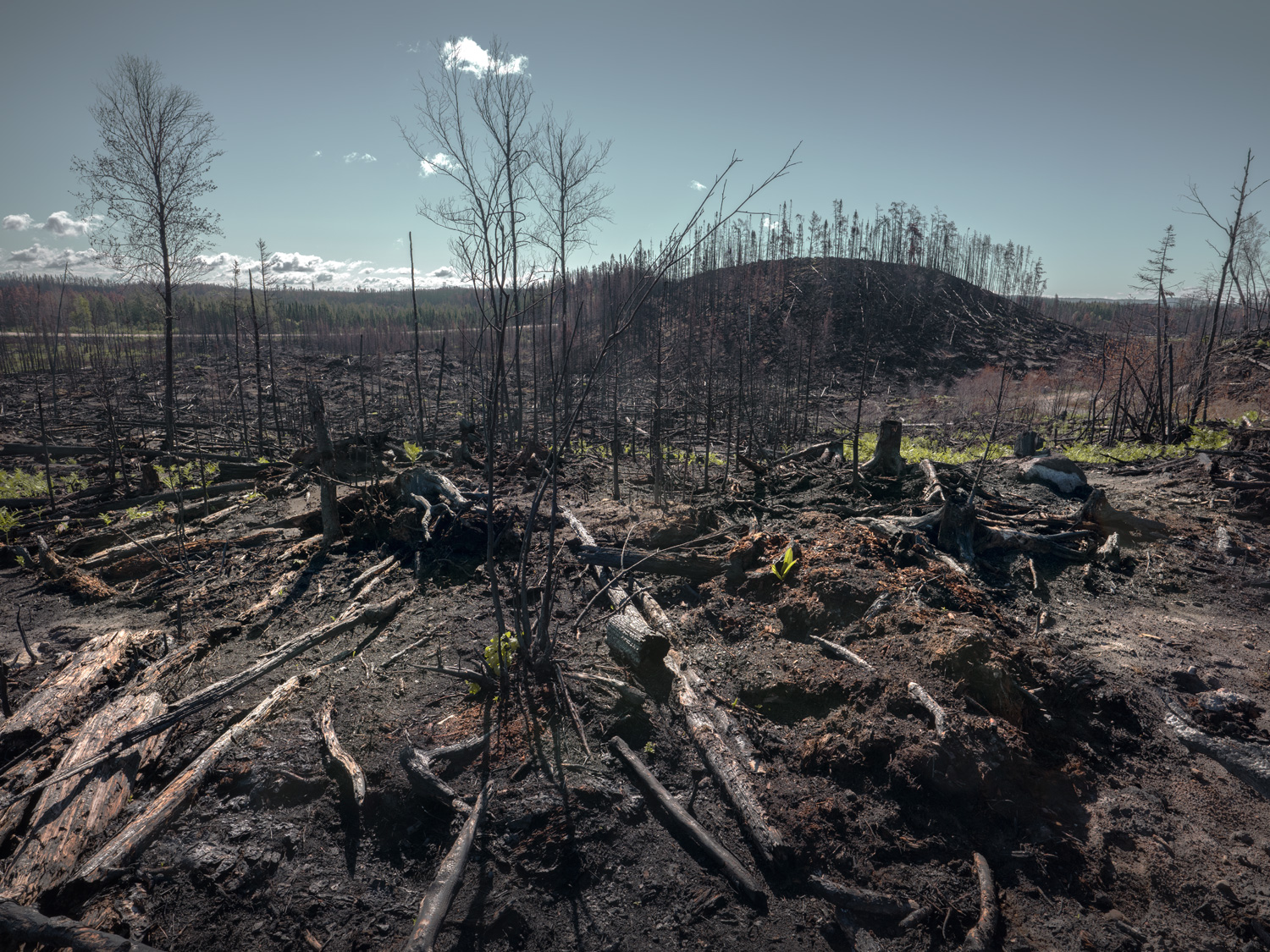
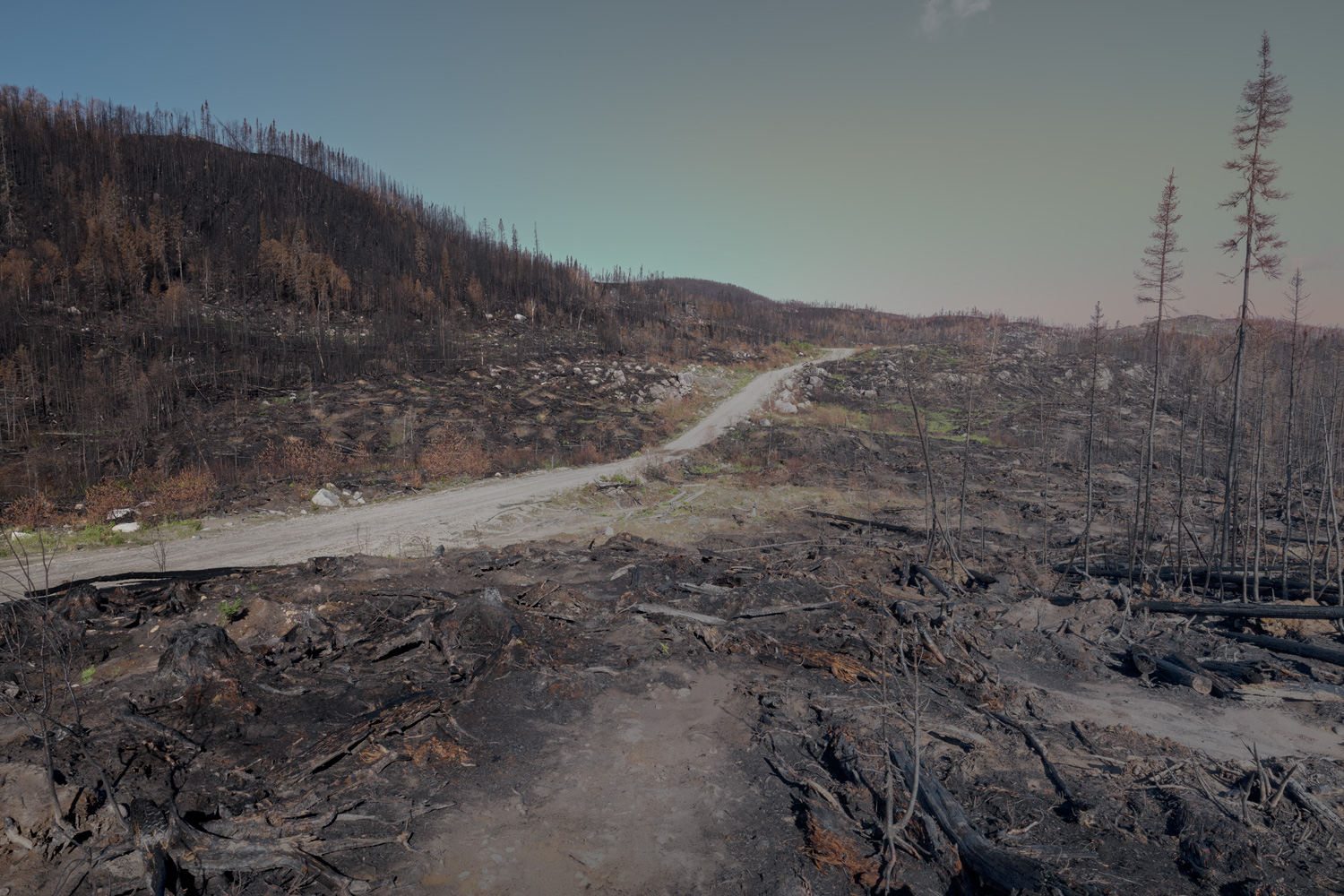
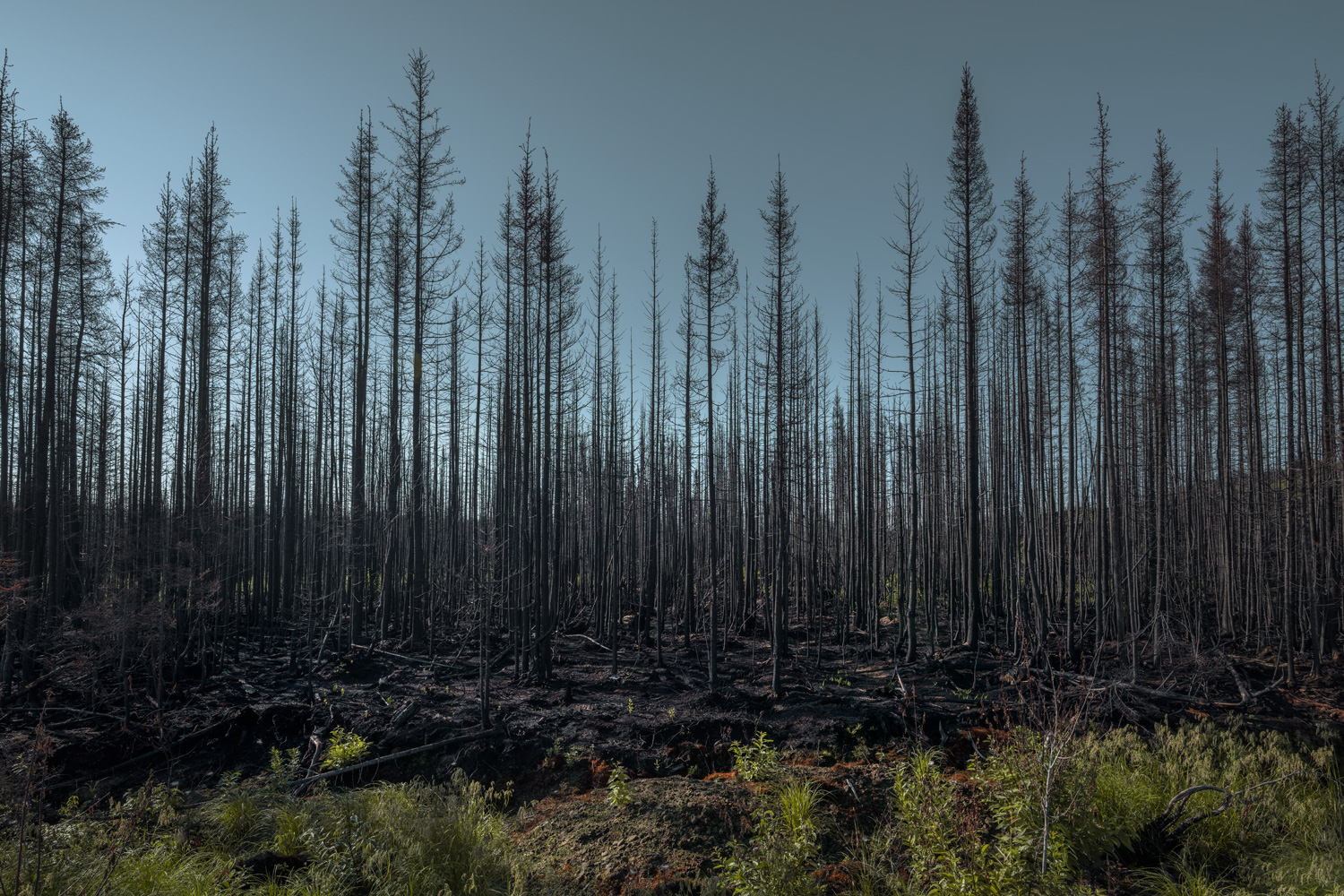
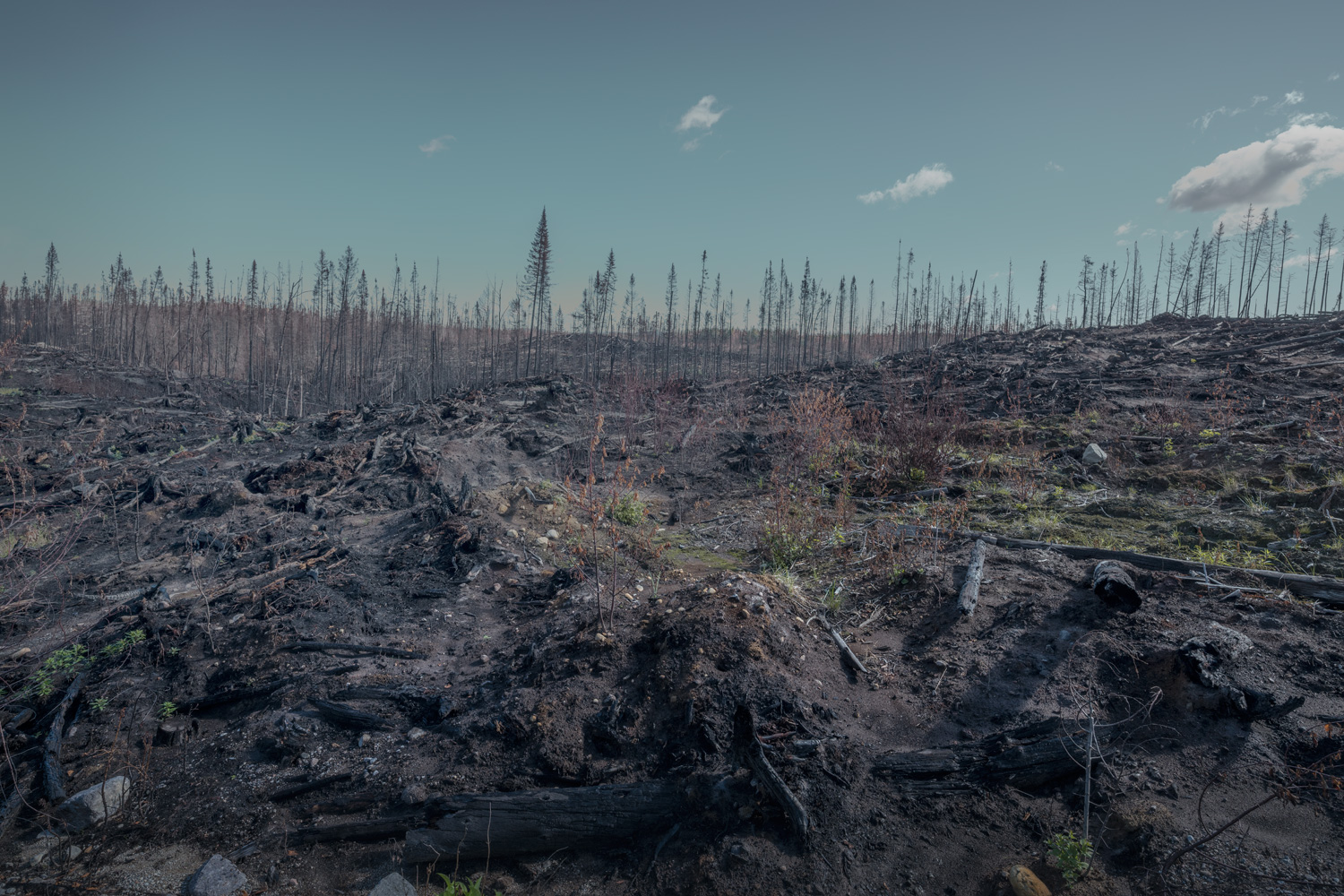
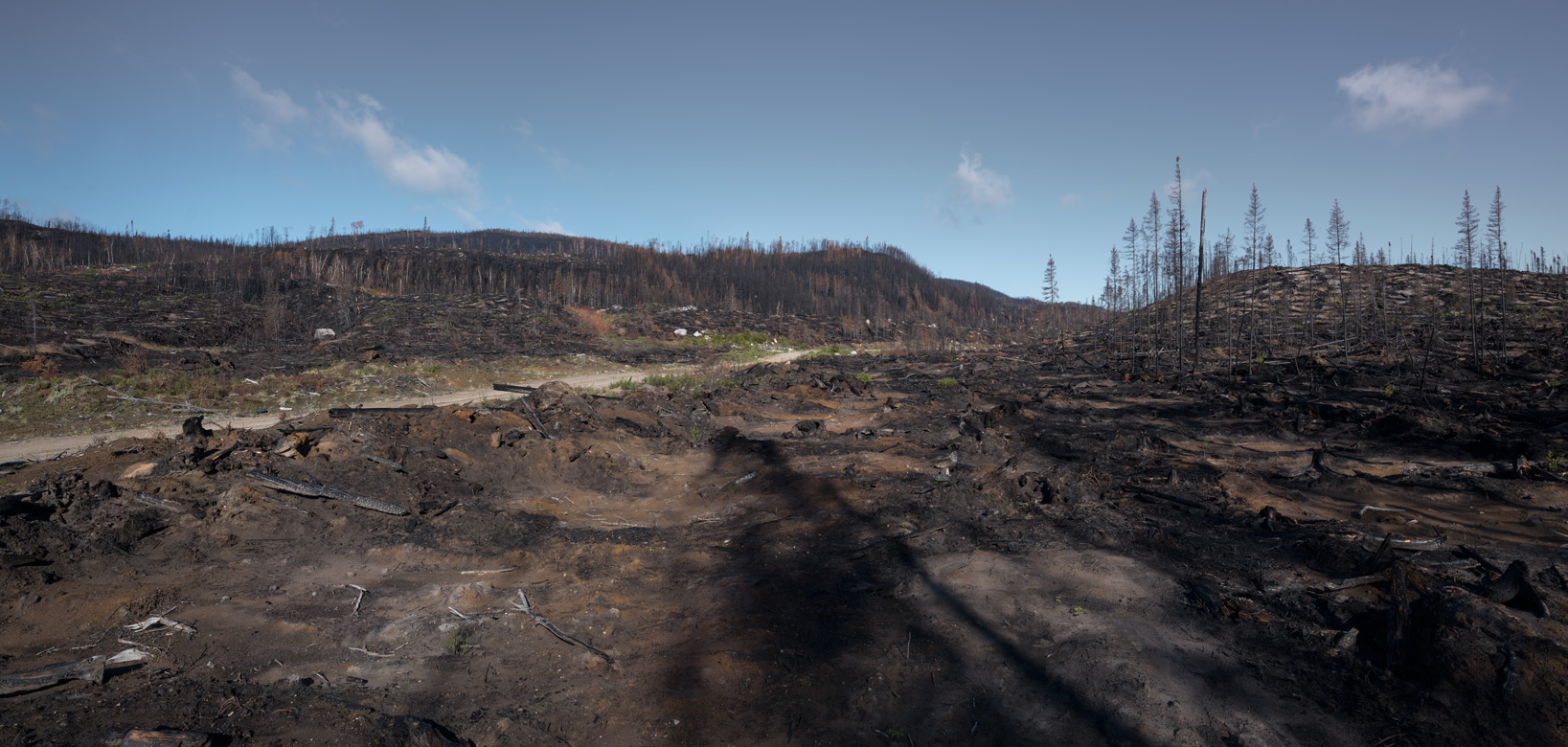
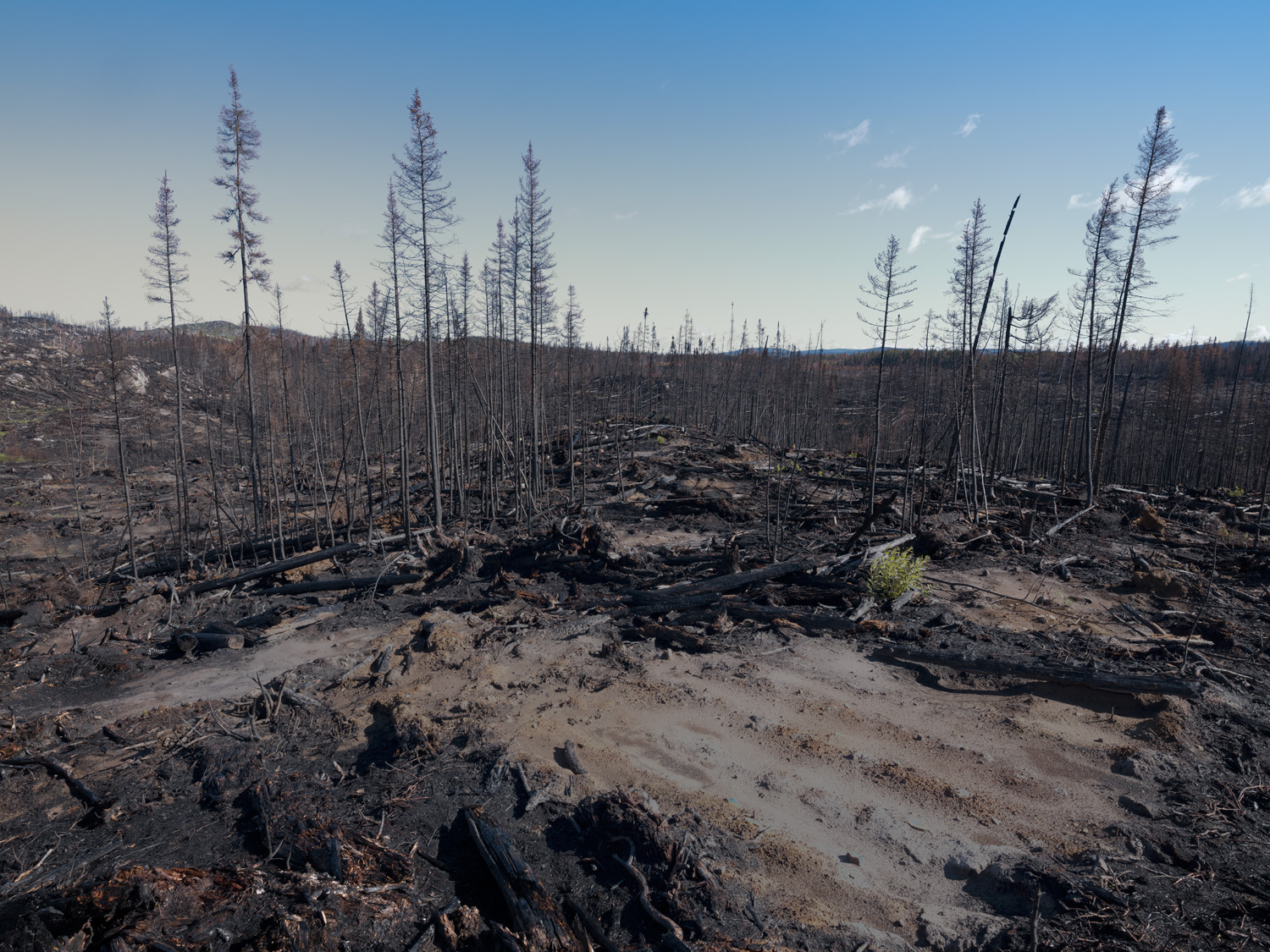
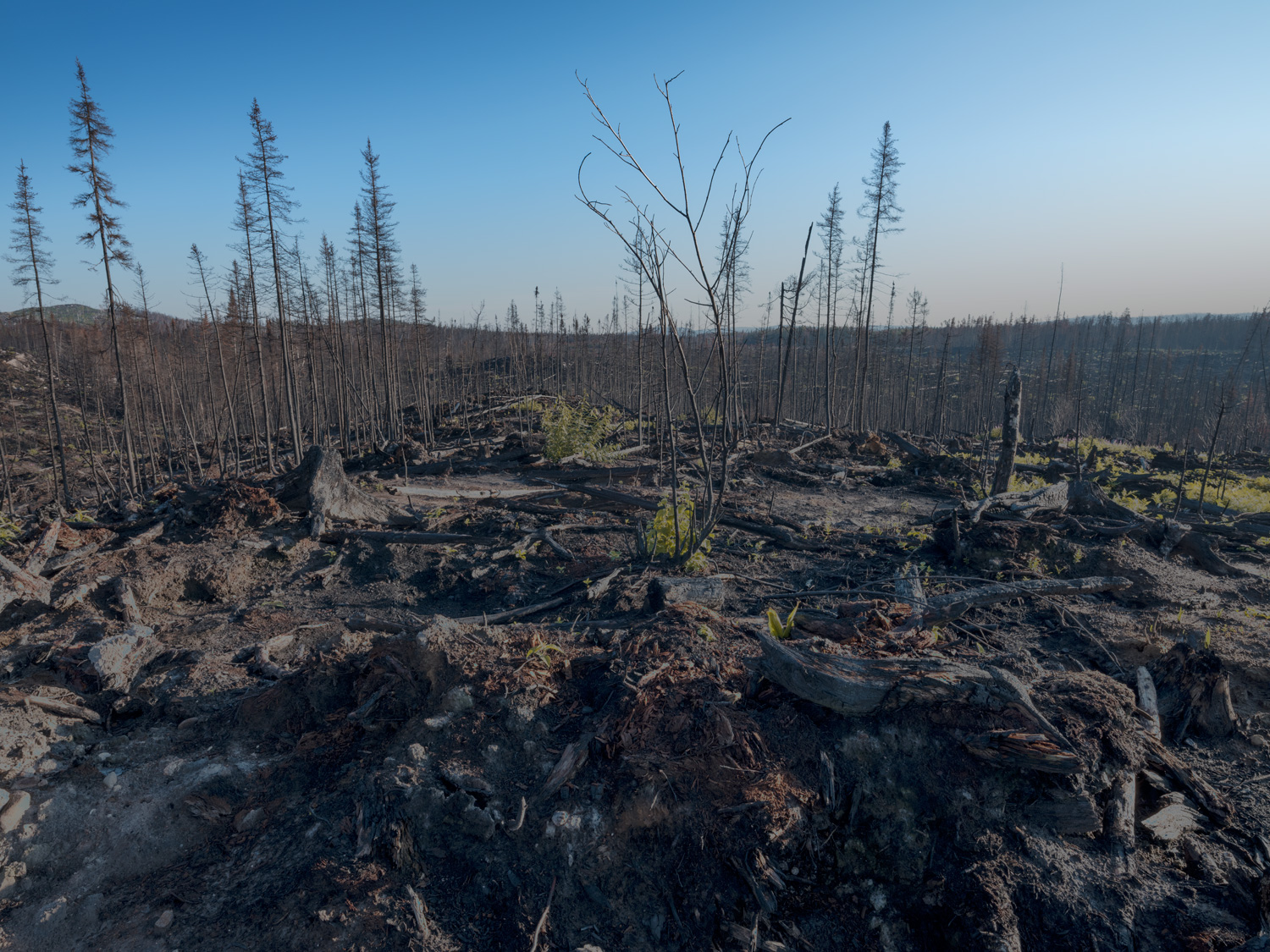
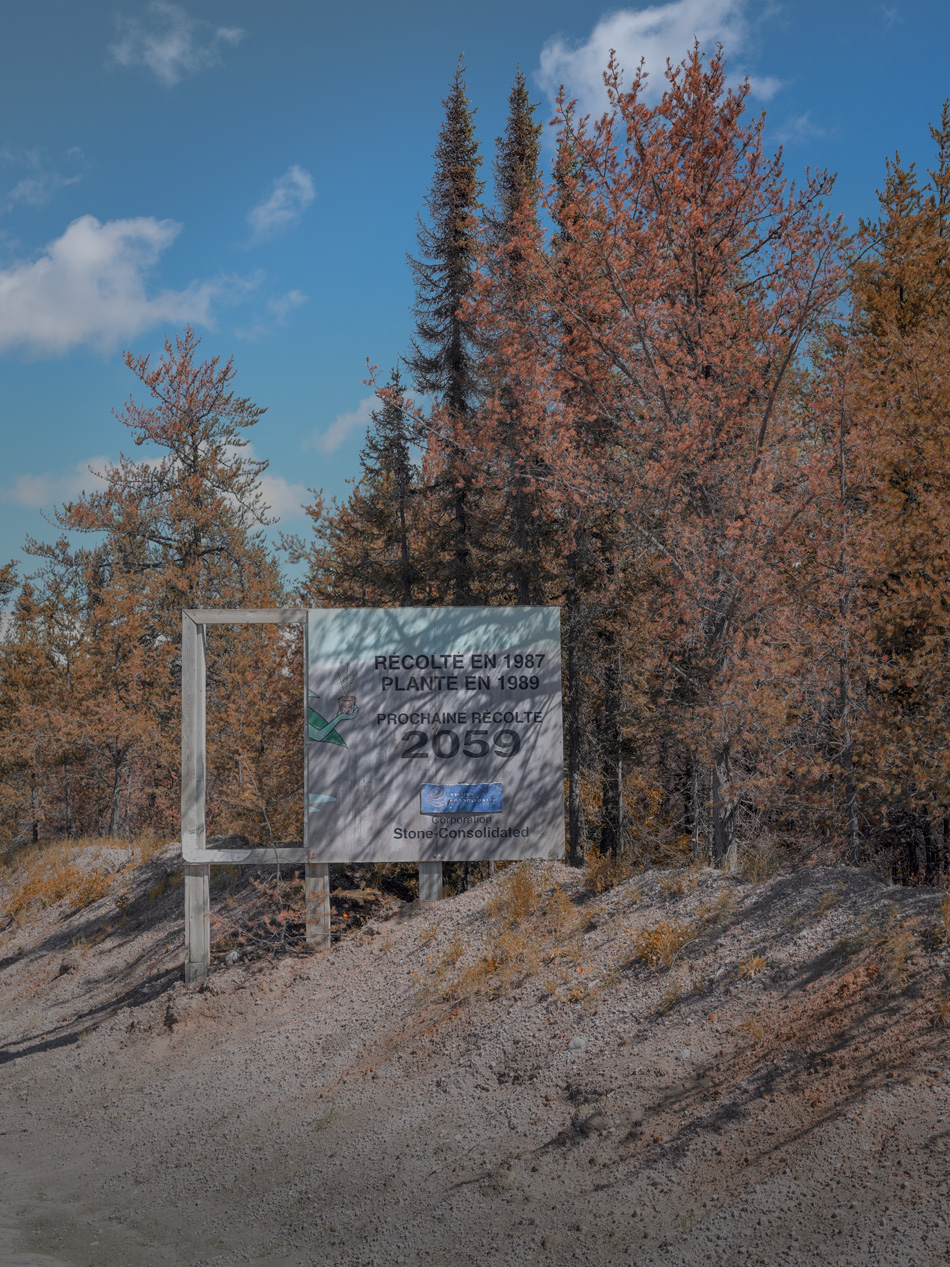
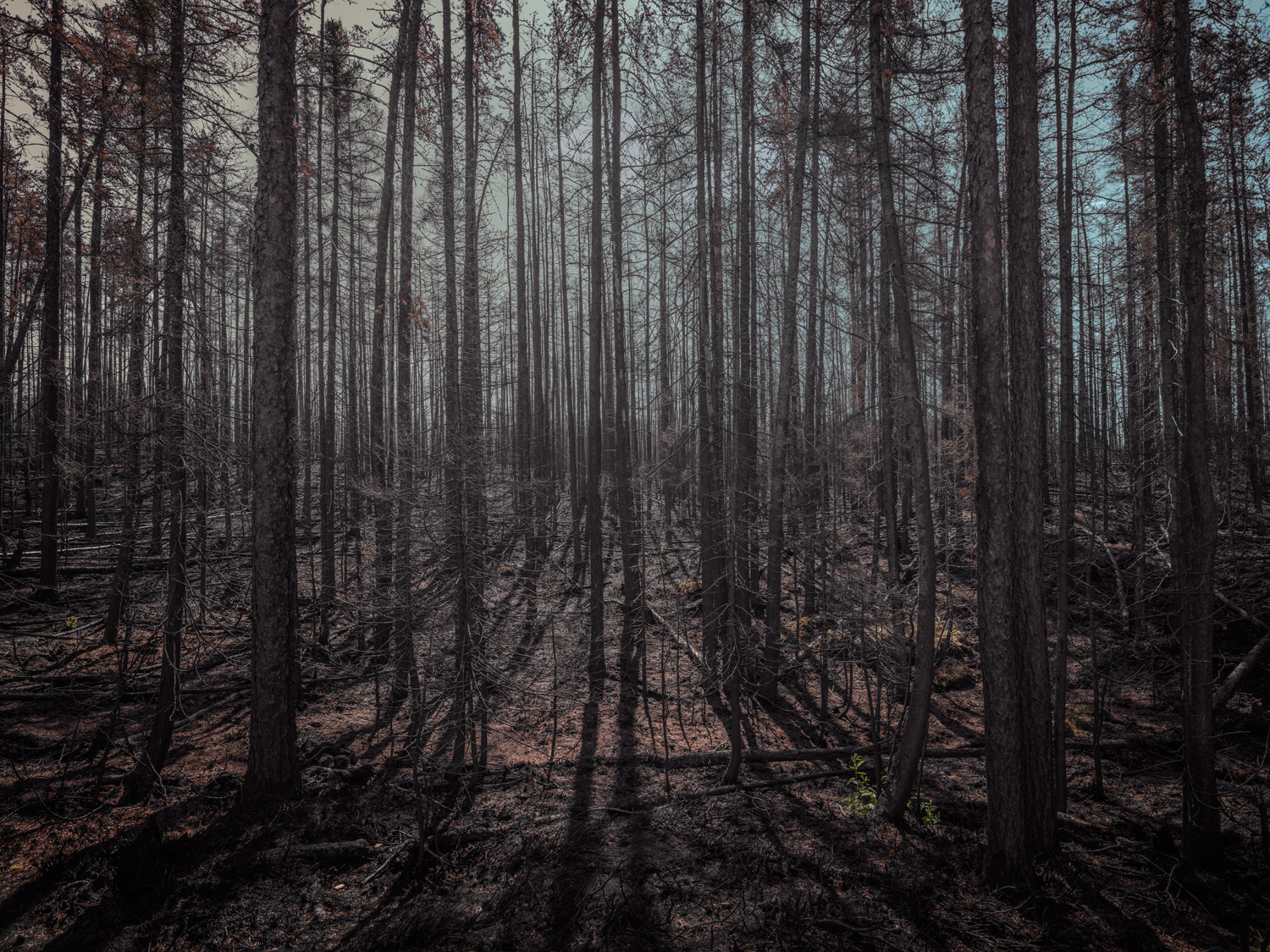
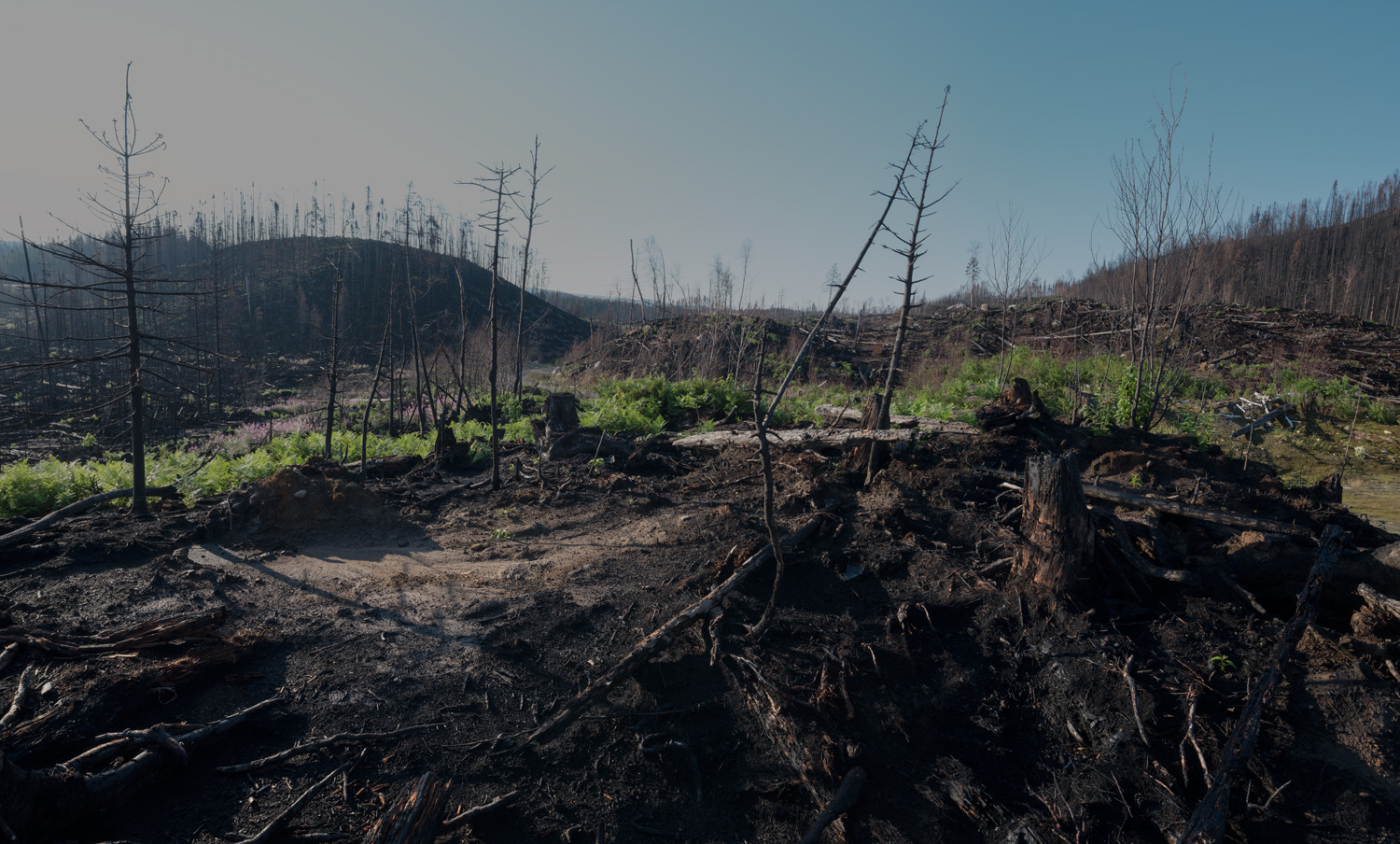
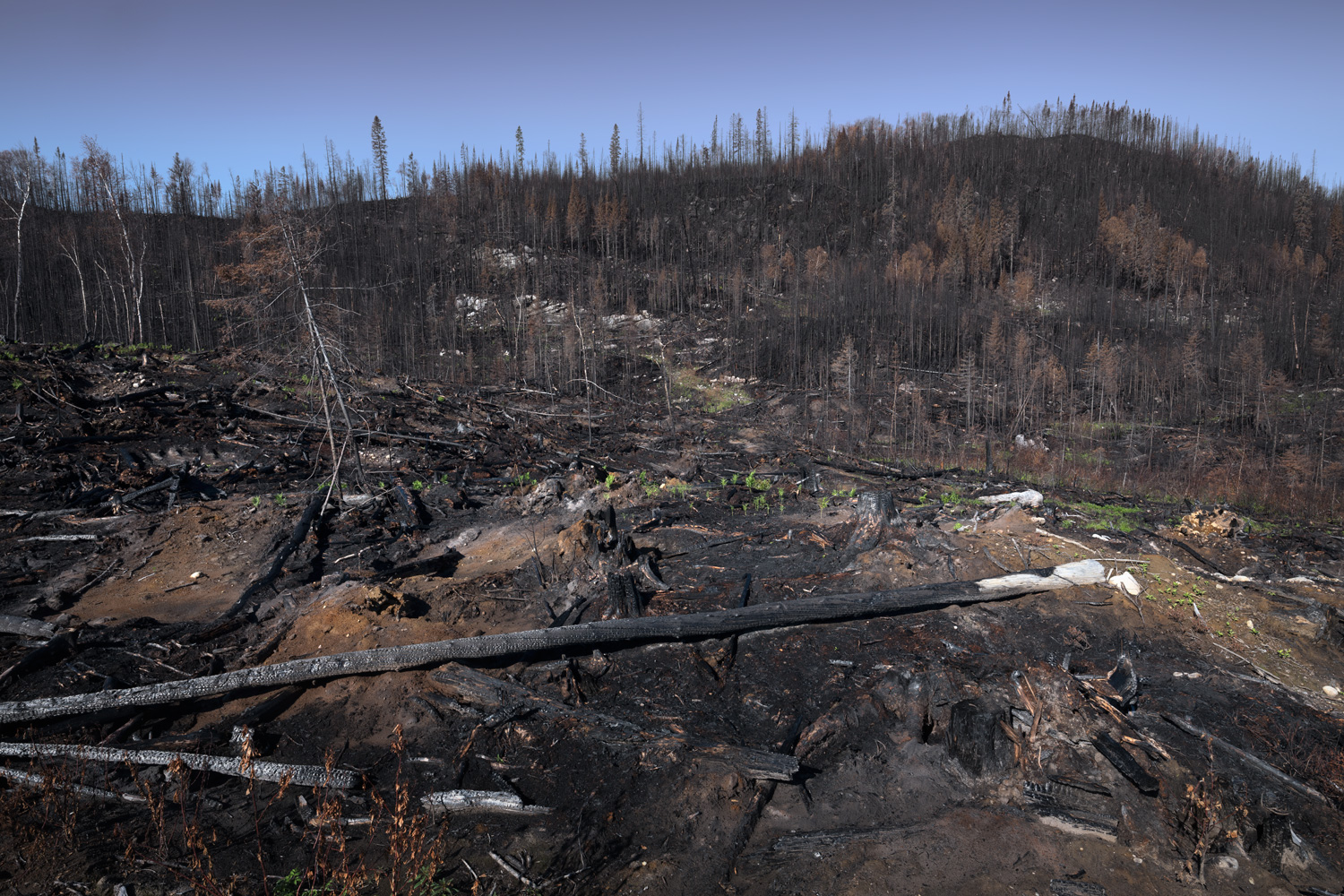
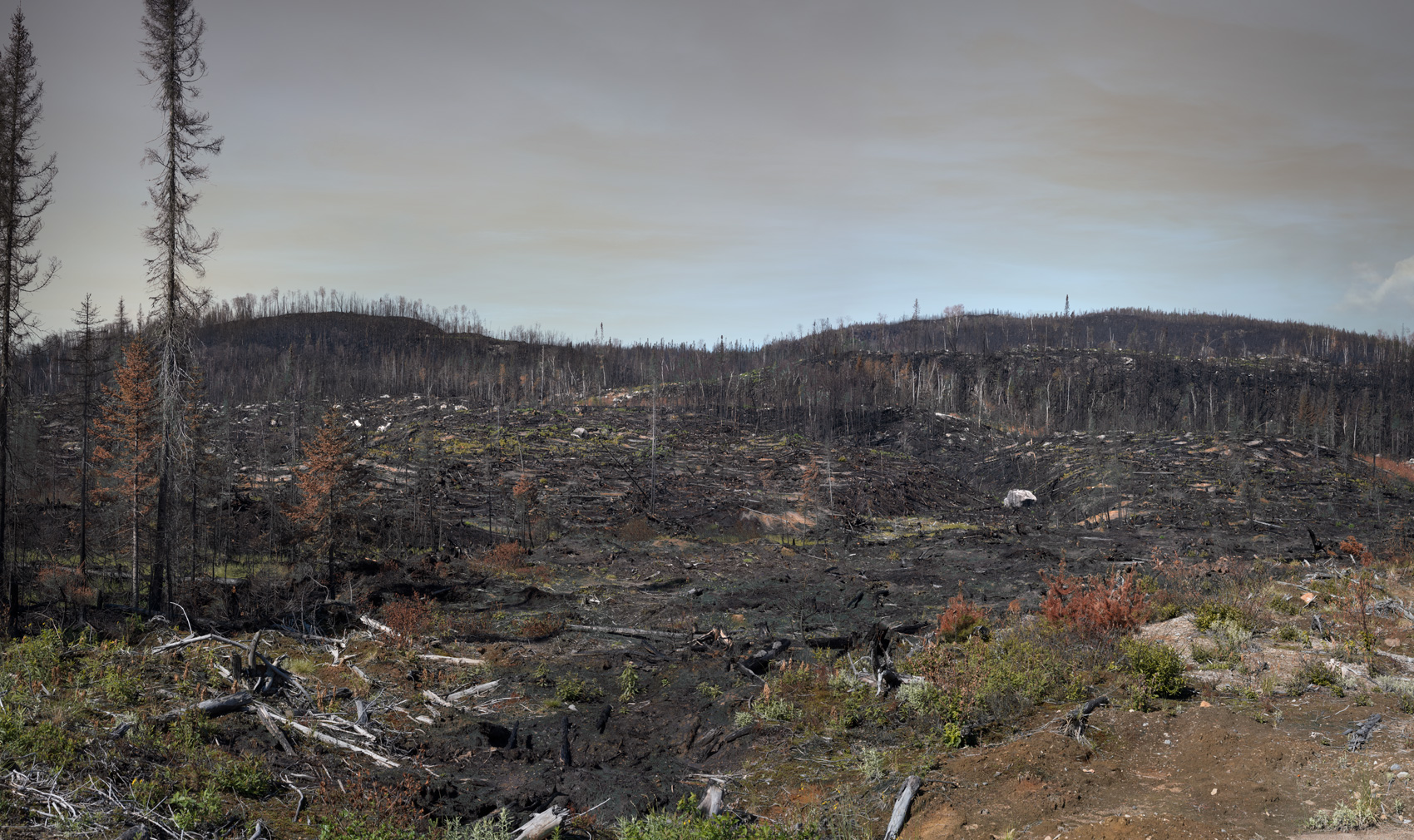
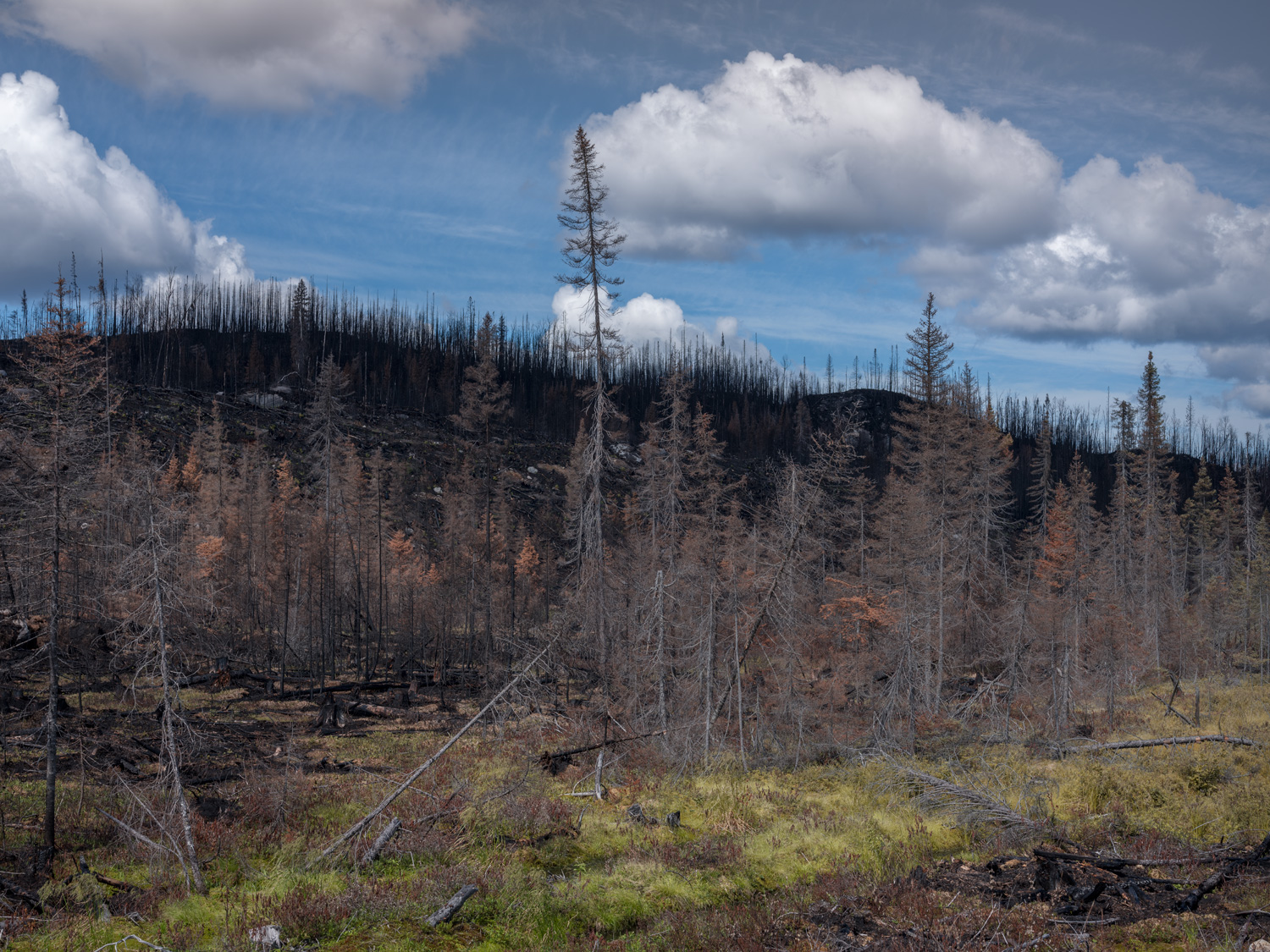
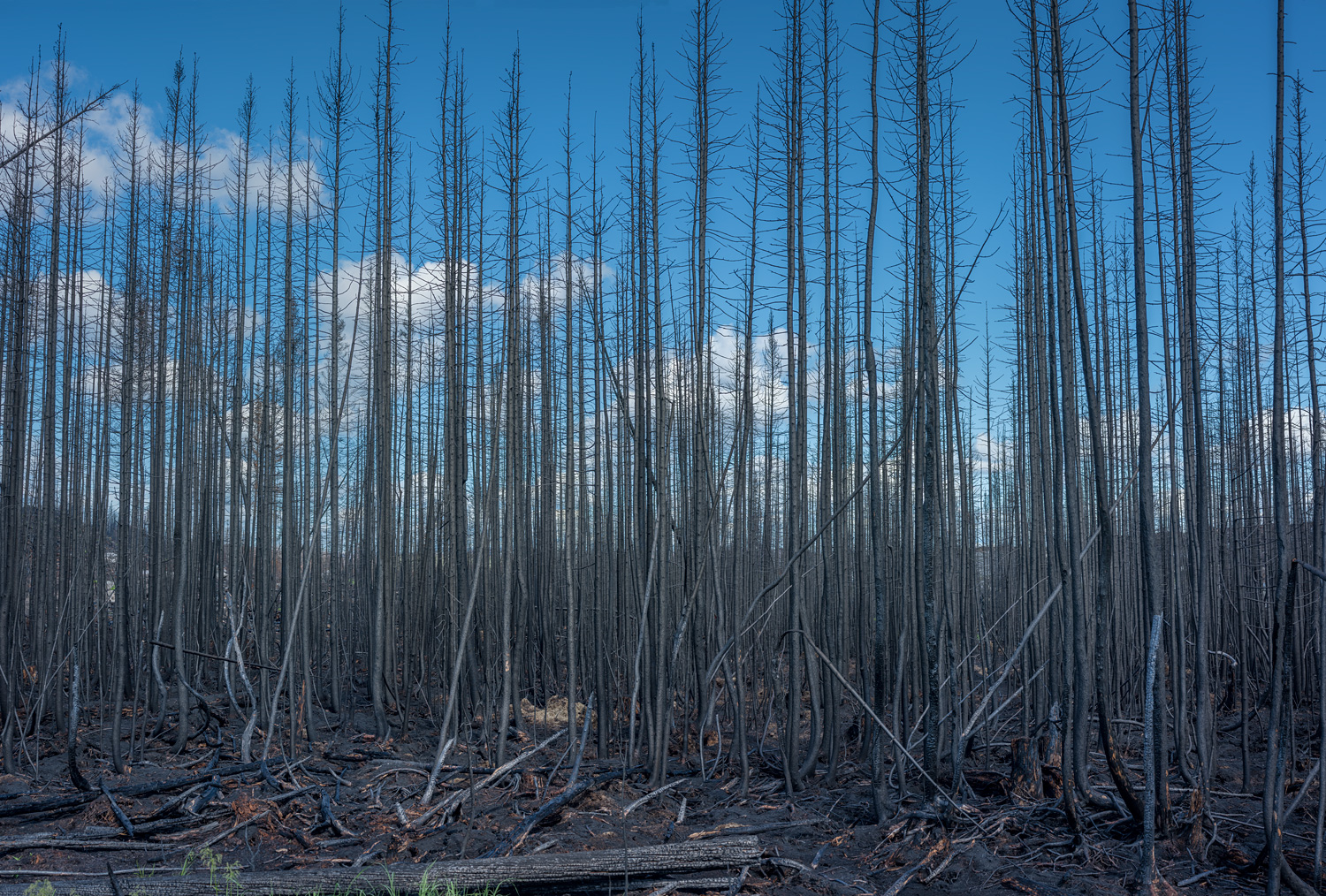
In June 2020, a massive inferno raged north of Lac Saint-Jean (Québec), decimating 72,000 hectares of the boreal forest. I took off with my camera along the rough gravel roads leading to the region, an unorganized territory within the Des Passes ZEC. This controlled zone is riddled with timber harvesting areas and access roads; tracked harvesters have left scars everywhere. The fire reduced what was left of the altered landscapes to ashes, and this land is now completely devastated. I picked my way through some of these blackened desert moonscapes.
Fire is a normal part of forest life, but when it hits hard in forests that have not yet achieved the maturity required to regenerate, it takes hundreds of years to re-establish the original plant cover. New forest plantings are comprised of young trees that do not produce many seeds and that represent only a few species destined for the lumber industry. These areas suffer from severe ecological poverty: plantings can never replace what nature took centuries to create.
Forests cover one third of the earth’s land surface, but this proportion continues to shrink. Since the advent of agriculture, about 11,000 years ago, we have chopped down more than half our forests. Every year, worldwide, between 13 and 15 million hectares of forest disappears. Intact primary forests offer habitat for countless lifeforms; they are essential to maintaining biological processes and ecological balance.